

Modern businesses produce huge volumes of data through the activities of customers, business processes, and digital channels. Nonetheless, the value of data is determined by analysis and pattern recognition within that data to make informed decisions based on the gained insights.
This has made professionals in data science and data analytics more popular. Even though both areas have much in common, their requirements and approaches are quite different.
Differences between Data Science vs Data Analytics could be helpful for career switchers and students in choosing the area that fits them best.
Data has become an indispensable asset for businesses seeking to increase their efficiency and learn about their customers’ behavior and future trends.
Data professionals usually pay attention to collecting information, searching for patterns, providing insights, and making decisions. Nevertheless, the approach can vary based on the concentration on the analysis of existing information or the development of predictive solutions.
That is why the difference between data science and data analytics is crucial.
While both of these branches have some similarities as they require analysis, they vary in many aspects such as level of complexity, responsibilities, technical skills, and uses in business.
Data science is an area that employs statistics, programming, machine learning, and various other methods of analysis to obtain practical information from data sets.
Some of the main activities performed by a data scientist include predicting future events, finding trends, and recommending actions to companies according to their analysis.
The roles and responsibilities of a data scientist include the following:
It is highly desirable for individuals in this field to have good data science skills.
Data Analytics is an area of study that involves analyzing data for trends and giving answers to various business queries through such analysis. Some of the tasks performed by a Data Analyst involve the use of structured data to create reports and dashboards, among others.
Tasks Performed By a Data Analyst:
Among some essential skills of data analytics are data visualization, statistics, spreadsheets, database management, and communication.
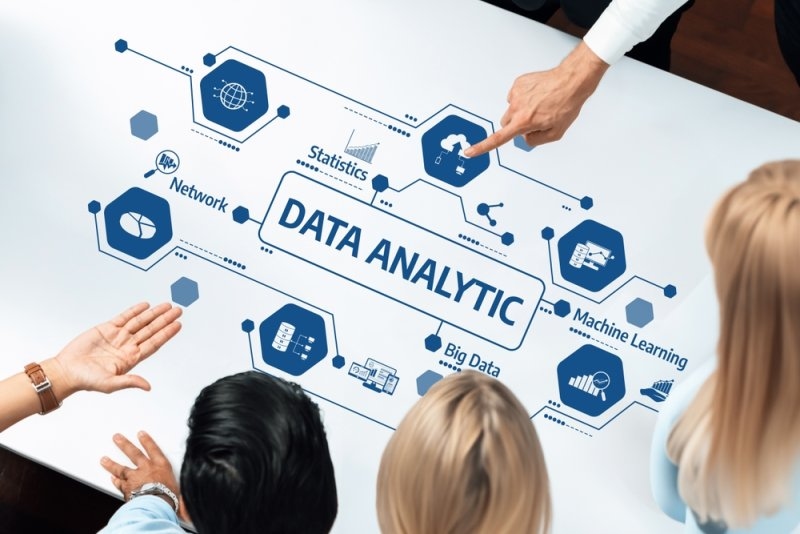
What separates the two disciplines is the nature of the problems that are solved under them.
Data analysis involves determining what has occurred and why. On the other hand, data science employs sophisticated methods to forecast what will occur.
| Category | Data Science | Data Analytics |
| Key Purpose | Predictive analysis and complex insights | Analysis of data for decision-making |
| Key role | Data Scientist | Data Analyst |
| Key activities | Machine learning, prediction, model building | Reporting, visualization, trend analysis |
| Technical knowledge | Advanced programming and statistics knowledge | Analytical skills and reporting tools knowledge |
| Data type | Complex data sets | Business-related data |
| Main objective | Predict future results | Identify current patterns |
| Common tools | Machine learning software, programming language, statistical software | Reporting tools, databases, visualization software |
Also Check: Data Engineer Career, Skills, Salary, & Growth Opportunities
Skill overlap in data science and data analytics is real, especially around SQL, statistics, and data cleaning. The difference is depth and direction. Analysts need enough technical strength to trust the numbers; scientists need enough engineering and math to make predictions reliable outside a notebook.
Mostly for beginners, data analytics skills are easy to prove since you have public data sets, business problems, and clear visualizations. Data science skills are hard to prove since you need to convince the employer that your model is working and solving the problem.
A good analyst should know SQL, spreadsheets, BI tools, statistics, and a scripting language. Typical data analytics tools include Excel, Tableau, Power BI, Looker, and dbt.
Data scientists often add Python, machine learning libraries, experiment tracking, cloud services, and data science tools such as scikit-learn, pandas, PyTorch, or MLflow.
Technical skill won’t save a weak recommendation. A data analyst must turn messy findings into a clear call, such as “pause this channel” or “fix this onboarding step before adding spend.”
A data scientist needs similar judgment, plus the patience to explain trade-offs like false positives, sampling bias, and why a model with 92% accuracy may still fail for the minority class.
Also Read: What is a Data Visualization Engineer, and How Can it Help?
Career outcomes vary by country, industry, and company size. Data analytics jobs are often more accessible for career switchers because junior roles exist in marketing, finance, operations, healthcare, and product teams. Data science jobs usually ask for stronger programming, statistics, or domain expertise even at entry level.
Pay can be higher for scientific roles, especially in technology, finance, and AI-heavy teams, but higher pay comes with a steeper hiring bar. A data scientist interview may include coding, probability, model evaluation, case studies, and system design. A data analyst interview usually centers on SQL, metrics, dashboard thinking, and business interpretation.
For an analytics portfolio, build three projects: a SQL analysis, a dashboard, and a written business memo under 800 words.
For a science portfolio, build two stronger projects rather than five shallow ones; include baseline models, error analysis, feature reasoning, and a plain-English explanation of business value. A realistic data science career plan often needs 6 to 12 months of focused practice if you’re starting from scratch.
An analytics path can move toward senior analyst, analytics engineer, product analyst, BI manager, or strategy roles. A scientific path can move toward machine learning engineer, applied scientist, research scientist, or ML product lead. A data analytics career may suit you better if you want frequent contact with business teams and quicker feedback on decisions.
Several variables influence the data science vs data analytics salary comparison.
For instance, data scientist positions might involve more technically demanding skills compared to those of a data analyst. This would give data scientists a higher earning capacity. Nevertheless, data analyst positions present lucrative options since all businesses need data analysts.
Both of these roles continue to grow in popularity because of the digitalization of companies and the use of decisions based on data.
There are many industries in which one can pursue their careers in the fields of data science and data analysis. These include technology, healthcare, finance, retail, marketing, and manufacturing.
Whenever one has to make these decisions for the first time, they should base their choice on their personal interests and goals. Those people who are interested in statistics, programming, artificial intelligence, and problem-solving will most likely choose data science.
Those people who love analyzing the performance of businesses and creating reports by analyzing the available data will most likely choose data analytics. Learning data analytics will help learners build data skills before venturing into data science.
When deciding whether data science or data analytics is best for you, consider what skills you have and what you hope to accomplish professionally. Although both are based on working with data, they vary in terms of difficulty, duties, and results.
Data analytics involves analyzing existing data, whereas data science applies more complex methods to predict future possibilities. Both career options present great prospects for those who wish to work with data.
Well, it really depends on what your aims and preferences are. Data science might be more appropriate for people who like advanced technologies and predictive models, while data analytics will suit those who like business and reporting.
It might be true that data science is more difficult because in many cases, it involves programming, statistics, and machine learning, but it is still an individual question.
Think about your personal interests, your technical knowledge, and where you want to go with your career. If you like programming and predictive models, data science would suit you more. But if you like trend analysis, then go for data analytics.
A data scientist creates prediction models and utilizes advanced analytics, whereas a data analyst interprets data and makes reports from it. Both professions help in making decisions based on data analysis, but each has its own specializations.
Both areas have good job opportunities. The choice of which is better will depend on your skills and experience and the kind of work you wish to do. It also depends on your interests and career aspirations.
This content was created by AI